SEPTEMBER 2026
SARAWAK SOEs TARGET RM9.62 BILLION IN ADDITIONAL REVENUE BY 2030
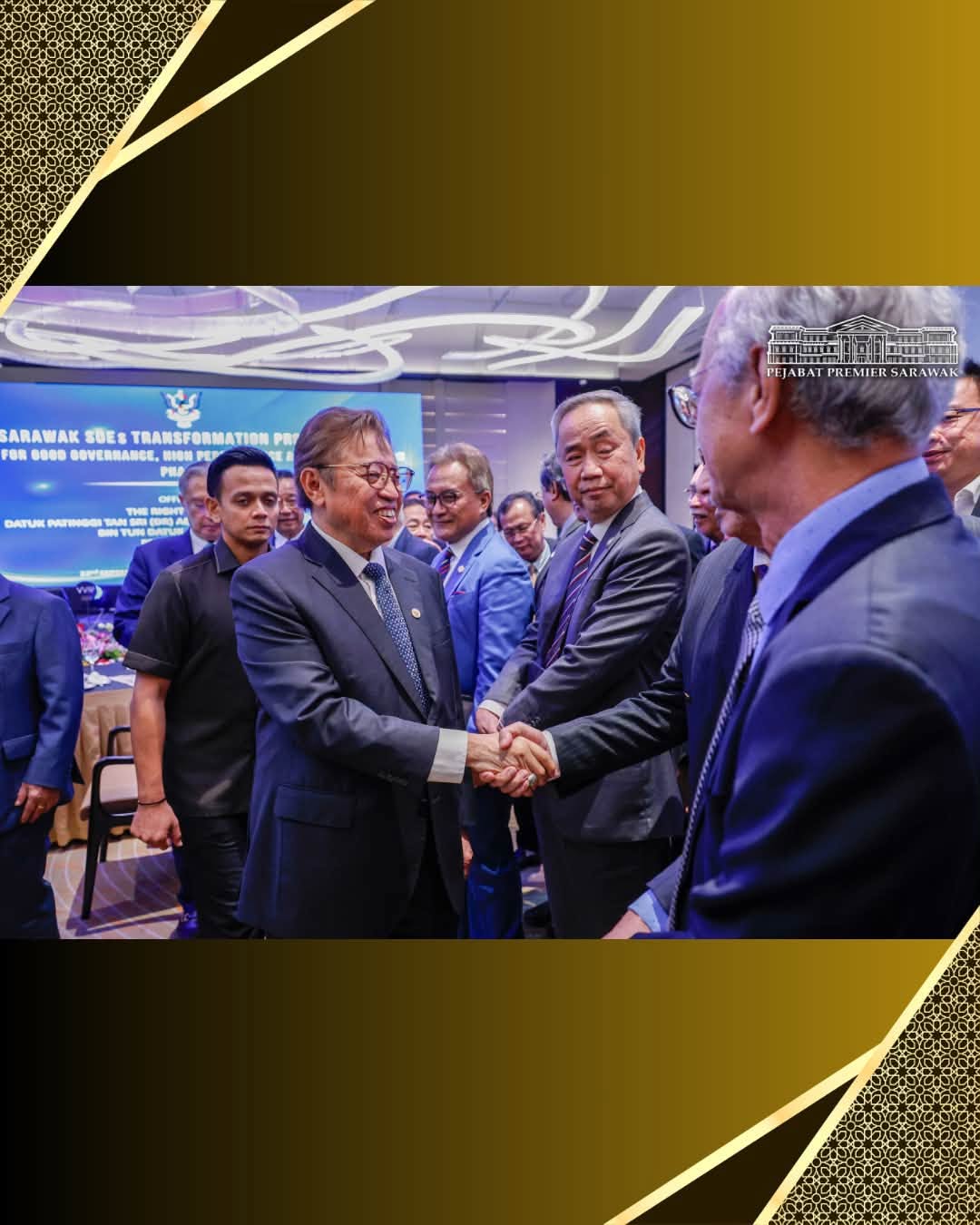
KUCHING, 22 September 2026 — Sarawak’s State-Owned Enterprises (SOEs) are projected to generate an additional RM9.62 billion in revenue by 2030 under the second phase of the Sarawak SOEs Transformation Programme, as the State steps up efforts to strengthen financial performance, governance and long-term value creation.
The Phase 2 exercise also projects RM1.6 billion in additional Adjusted Profit After Tax (APAT) and approximately RM1.27 billion in dividends between 2027 and 2030, based on opportunities identified across 32 statutory bodies and government-linked companies spanning 17 sectors.
Premier of Sarawak, Datuk Patinggi Tan Sri (Dr) Abang Haji Abdul Rahman Zohari bin Tun Datuk Abang Haji Openg said the projections reflected the potential identified through the transformation exercise, but stressed that their value would ultimately be determined by implementation.
“These are encouraging numbers. But let me be clear: These are projections, not achievements. Their real value will depend on how effectively they are translated into results,” he said when officiating the Sarawak SOEs Transformation Programme – Phase 2: A Pledge for Good Governance, High Performance and Value Creation at the Hilton Hotel here today.
Phase 2 marks a transition from the diagnostic and assessment stage towards greater ownership by individual SOEs, with participating entities required to develop their respective strategies and initiatives based on their current position, their desired state by 2030 and the measures needed to bridge the gap.
The transformation framework places greater responsibility on boards, Chief Executive Officers, General Managers and management teams to ensure that strategic plans are translated into measurable outcomes.
Each entity is expected to identify opportunities within its own mandate, including new revenue streams, cost efficiencies, asset commercialisation and access to new markets.
This recognises that financial self-reliance cannot be applied through a single commercial model across all State entities. SOEs with regulatory, social, public-service or strategic responsibilities may continue to require government support, while such support is expected to be linked to clear mandates, measurable outcomes and stronger financial discipline.
For commercially oriented SOEs, the transformation agenda places greater emphasis on revenue growth, productivity, cost management, asset optimisation and competitiveness.
“Our commercially oriented SOEs, the message is straightforward: Compete. Earn. Grow,” he said, underscoring the expectation that State ownership should be leveraged to build competitive strength rather than shield enterprises from market discipline.
The wider transformation is aimed at developing stronger, more capable and sustainable State enterprises that can make a greater contribution to Sarawak’s economic development.
With Phase 2 entities now moving into implementation of their respective Transformation Playbooks, the first 100 days will serve as an important period for translating commitments into tangible actions, particularly in revenue generation, cost reduction, digital adoption and organisational restructuring.
The implementation phase will therefore place emphasis on measurable progress rather than plans alone, with the projected financial gains serving as targets against which the performance of participating entities can be assessed through 2030.